Meeting times & locationsMission clarification

The Orthodox Christian faith

The Faith Once Delivered to the Saints.

Discover the faith, worship, and healing life of the Orthodox Church.

Begin exploring ↓

At the center is Jesus Christ

God became man
to bring us into His life.

Orthodox Christianity confesses one God: Father, Son, and Holy Spirit. At its heart is Jesus Christ, the eternal Son of God, who became truly human, uniting divine and human natures without confusion. He entered our mortal life to free us from bondage to sin and death and bring us into communion with His eternal life.

Through Christ, the Cross becomes the Tree of Life. From His pierced side flow blood and water, signs of the life He gives to the world. Through His victory over death, all will rise at the resurrection. Everlasting life is communion with Him, who opens the way to adoption as children of God through faith.

Here, this faith is lived as well as confessed: in prayer and worship, repentance and forgiveness, love for our neighbors, and the daily work of examining ourselves, overcoming our passions, bearing one another’s burdens, and learning sacrificial love.

For He was made man that we might be made God…
St. Athanasius the GreatOn the Incarnation · 54.3

We become “gods” by grace: sharing in His life, while remaining human persons and never becoming God by nature.

01 · Received and handed on

Apostolic continuity

The Orthodox Church understands herself as the continuation of the Church founded by Christ and His Apostles. Christ entrusted His Apostles with real authority in His Church: to bind and loose (Matthew 18:18), and to forgive or retain sins (John 20:21–23). Through apostolic succession, bishops continue the ministry of teaching, shepherding, and preserving the apostolic faith.

The Seven Ecumenical Councils, from Nicaea in 325 to Nicaea II in 787, defended the Church’s confession of the Trinity, the full divinity and humanity of Christ, and the proper honoring of icons. The Nicene-Constantinopolitan Creed remains our shared confession in worship.

…contend earnestly for the faith which was once for all delivered to the saints.
Jude 1:3Holy Scripture · excerpt
02 · The life of the Holy Spirit

Scripture & Holy Tradition

The Bible is the inspired Word of God and stands at the heart of Holy Tradition. The Church gives us the Bible, rather than being created by it: the apostolic Church existed before the New Testament was completed and received, recognized, and preserved its books. We receive Scripture within that living communion, guided by the Holy Spirit.

St. Paul calls the Church the “pillar and foundation of the truth” (1 Timothy 3:15). The Creed, the councils, the witness of the Church Fathers, and the prayers of the Liturgy help us understand Scripture within the apostolic faith. Holy Tradition is this living transmission of the faith, preserving the Gospel and guiding our response to it.

…stand fast, and hold the traditions which ye have been taught, whether by word, or our epistle.
2 Thessalonians 2:15Holy Scripture · KJV, excerpt
03 · Transformed by grace

Theosis: union with God

The goal of the Christian life is communion with God. Orthodoxy calls this theosis, or deification: becoming by grace what we cannot be by nature, sharing in God’s life while remaining His creatures.

Through Christ in the Holy Spirit, we are healed and transformed. Prayer, repentance, the Holy Mysteries, fasting, and works of mercy belong to this journey. Our willing cooperation with God’s grace is itself sustained by His gift; we cannot earn or manufacture union with Him.

How uncreated grace makes this possible →
…that through these you may be partakers of the divine nature…
2 Peter 1:4Holy Scripture · excerpt
04 · Healing in the Body of Christ

The Holy Mysteries

The Church is a spiritual hospital, where Christ heals the wounds of sin and leads us beyond a return to Eden into communion with His divine life. Through Him, we become children of God, grow into His likeness, and partake of His uncreated energies. At the heart of her worship is the Divine Liturgy and the Holy Eucharist, in which the faithful receive the true Body and Blood of Christ.

Seven Holy Mysteries are commonly named: Baptism, Chrismation, the Eucharist, Confession, Holy Unction, Marriage, and Ordination. Their number does not limit God’s work: the whole life of the Church is sacramental, drawing our ordinary lives into His Kingdom.

Discover Orthodox worship →
He who eats My flesh and drinks My blood abides in Me, and I in him.
John 6:56The words of our Lord
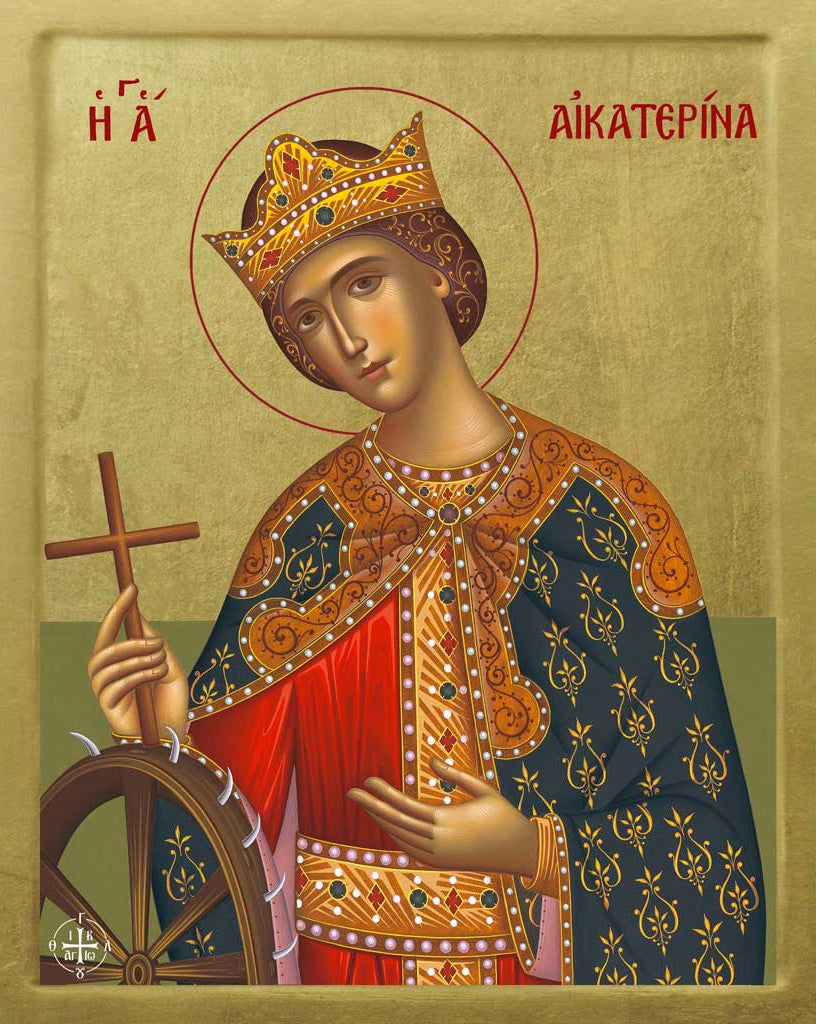
Icon of St. Catherine, patron saint of our mission
St. Catherine · Our patron saint

05 · The Word became flesh

Icons: a witness
to the Incarnation.

Because Christ truly became man, the Seventh Ecumenical Council affirms that His holy icons must be set forth and venerated in the Church. This reverent veneration is distinct from the worship due to God alone.

In venerating His saints, we glorify Christ, whose grace makes them holy and whose Life sustains them in eternity. Mary is honored as the Theotokos—the Mother of God—because the One she bore is God incarnate; her honor points us toward her Son.

We share with the saints the same Cup, the same Blood, and the same life in Christ: one Body that death cannot divide (1 Corinthians 10:16–17). We honor them as members of God’s family, into which we, too, are being gathered.

Sin isolates; Heaven is communion. Those who receive Christ and believe in His name are given the right to become children of God (John 1:12). We enter His Kingdom together, united with His saints in love.

For the honour which is paid to the image passes on to that which the image represents…
Seventh Ecumenical CouncilNicaea II · Definition, 787

06 · God gives Himself

What is uncreated grace?

Our communion with God is real, because the grace that transforms us is truly His own divine life and action.

“Uncreated” means that this grace is not a created substance or a gift detached from God. It is God Himself acting and making Himself present to us. St. Gregory Palamas articulated the distinction between God’s essence and His energies to explain how the transcendent God can be truly encountered.

God’s essence—what He is in Himself—remains beyond the comprehension and participation of creatures. His energies are His eternal, uncreated activity: His life, light, and grace, in which He freely allows us to participate. These are not separate parts of God or impersonal forces. God remains one and undivided.

This is the foundation of theosis. We truly share in God’s life through His energies without becoming God by essence or losing our identity as human persons. The uncreated light revealed at Christ’s Transfiguration expresses this divine glory.

We know our God from His energies, but we do not claim that we can approach His essence. For His energies come down to us, but His essence remains unapproachable.
St. Basil the GreatLetter 234
How does this differ from Western theology?

The Orthodox confession of uncreated grace and the essence–energies distinction is a significant theological difference from much Latin scholastic theology and many Protestant accounts of salvation. In classical Latin scholastic language, sanctifying grace is often described as a created gift or habit in the soul. Orthodoxy emphasizes the uncreated divine energy itself, through which we have direct communion with God; its created effects in us are distinct from that grace.

Many Protestant traditions give particular emphasis to justification—being declared righteous through faith—and speak of sanctification as the Spirit’s work of transformation. Orthodoxy also proclaims forgiveness and transformation, holding them together within salvation as healing, communion, and theosis.

Western Christianity is diverse. Roman Catholic teaching also speaks of participation in divine life and the indwelling Holy Spirit, and some Protestant theologians speak of union with Christ or deification. The difference concerns how that participation is understood; it does not mean that Western Christians deny God’s presence or His transforming work.

Sources for this comparison

Thomas Aquinas on grace · Catholic Catechism on participation in divine life · Westminster Confession on justification and sanctification

Faith is learned by living it

Bring your questions.
Come and see.

You do not need to understand everything before visiting. At St. Catherine, an English-speaking parish rooted in the Slavic tradition, you are welcome to begin with worship, conversation, and a simple prayer.